

What is biological psychology?
The science of how biology influences mental health. Often it can also be how the body and mind shape each other. Think of it as a push and pull system. This area of psychology fits into the Biopsychosocial framework many psychologist use.


BEHIND THE WORK

My research sits at the intersection of mental and physical health. I specialise in understanding why common mental health conditions like depression and anxiety so often occur alongside physical health problems, and what that tells us about how we should approach care. I am currently completing a PhD in psychological medicine, drawing on epidemiology, population data, and the social and biological determinants of health.
NOTES BEFORE CONTINUING
Body and mind, connected

Physical and mental health aren't separate systems. When we ignore one, the other is likely to decline in tandem. The same is true for when we care for one, the other will benefit
From DNA to GP visit

Our DNA influences our mental health, however it be small or large effect. The question ‘is it hereditary or is it more complicated'?’ is a necessary part of the conversation.
The brain keeps changing
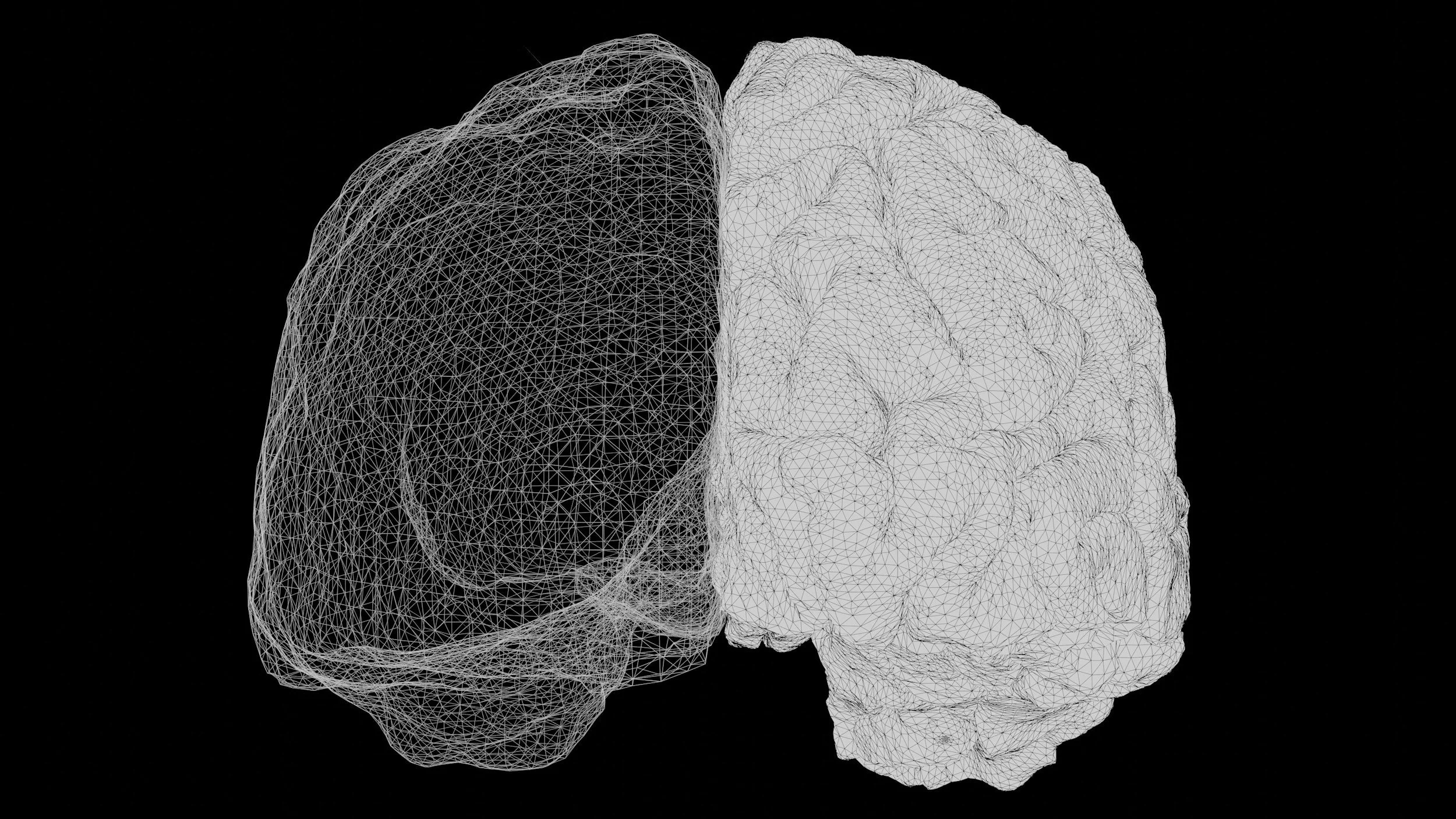
Neuroplasticity is vital to our approach of mental health in the modern world. It means that the brain keeps changing, learning, & adapting.
RESEARCH EXPLORED
A selection of my academic work in biological psychology and related fields.
A note before you read on. Some of this research is pre-clinical, which means that it is early-stage work that asks how biological systems might relate to mental and physical health, not what to do about it.
Each study is a small piece of a much larger puzzle, highly contextual, and a stepping stone toward understanding the mechanisms underneath. Findings like these are topical and worth thinking about — but they don't directly change day-to-day life for most people, and I'd be cautious of anyone who told you otherwise.

What do genetics tell us about depression, anxiety and where fat is stored on the body?
Depression, anxiety, and heart disease often occur together, and share some genetic roots. This study asked whether the genetic variants linked to depression and anxiety also affect where the body stores fat, since fat stored around the waist and organs raises the risk of heart disease and diabetes.
We found that over 99% of depression-linked variants, and 94% of anxiety-linked variants, overlapped with this unfavourable fat storage pattern. A higher genetic risk for depression was linked to more fat around the organs, a marker of heart disease risk, while anxiety showed the opposite pattern, suggesting the two conditions may affect the body differently despite sharing genetic ground.
These findings suggest genetics may help explain why depression so often occurs alongside obesity and heart disease. This doesn't prove one causes the other, but it supports treating mental and physical health together, and may eventually help identify people who'd benefit from earlier cardiometabolic screening.

Could weight-loss drugs affect mental health?
GLP-1 receptor agonists — the class of drugs that includes Ozempic and Wegovy — are now widely used for type 2 diabetes and obesity, and there's been growing public discussion about whether they also affect mood, impulsivity, or other aspects of mental health.
In this paper, we looked at natural genetic variation in the GLP-1 receptor gene across people from different ancestries, to see whether it might be a route through which these drugs influence mental health. The gene's effects on metabolic traits — body weight, blood pressure, diabetes — were consistent across ancestries. Its effects on mental health traits were not. The implication: any behavioural changes people notice on GLP-1 drugs are probably not working directly through the receptor itself. Something else is going on, and it's worth finding out what — especially in a culture where weight already carries so much shame.
Hayman, M. M. E., Jones, W., Aman, A., Ward, J., Anderson, J., Lyall, D. M., Pell, J. P., Sattar, N., Welsh, P., & Strawbridge, R. J. (2025). Association of GLP1R locus with mental ill-health endophenotypes and cardiometabolic traits: A trans-ancestry study in UK Biobank. Diabetes, Obesity and Metabolism, 27(4), 1845–1858. https://doi.org/10.1111/dom.16178

Inflammation: the key thread between mental and physical illness?
The short answer is yes it is a thread that is very important, but how?
Severe mental ill-health and cardiometabolic disease — things like high blood pressure, obesity, and type 2 diabetes — often travel together, and we don't fully understand why. In this paper, we explored a complex region of the genome best known for its role in immunity (the HLA/MHC locus) and found evidence that it influences both.
Some of the same genetic signals appear to shape risk for mood instability, anhedonia, and neuroticism and risk for cardiovascular and metabolic conditions — pointing to inflammation as a possible shared mechanism underneath. It's part of a growing picture that the boundary between "mental" and "physical" illness is more porous than we tend to treat it.
Hayman, M. M. E.*, Nicolson, K.*, Anderson, J., Cullen, B., Cavanagh, J., Ferguson, L. D., Graham, N., Ho, F. K., Lyall, D. M., Lyall, L., Parra Soto, S., Pell, J. P., Pellicori, P., Siebert, S., Welsh, P., Ward, J., & Strawbridge, R. J. (2023). Genetic architecture of the HLA/MHC locus in cardiometabolic disease, severe mental illness, and related traits. Research Square (preprint). https://doi.org/10.21203/rs.3.rs-2488695/v1 *Joint first authors.
This paper is not peer-reviewed, but still a part of my research portfolio.
MORE WAYS TO LEARN RESEARCH

Research is for the people, so it’s important that anyone can understand it. I periodically participate in engagement activities where we can talk about my research and what it means in the bigger picture. The next one being Glasgow Skeptics in January 2027!

Watch this space for tickets!
Some of the most important moments in research is sharing what you found with others. In many ways it can be sharing a post online, but sometimes it means going to conferences and sharing your findings with experts from around the world.
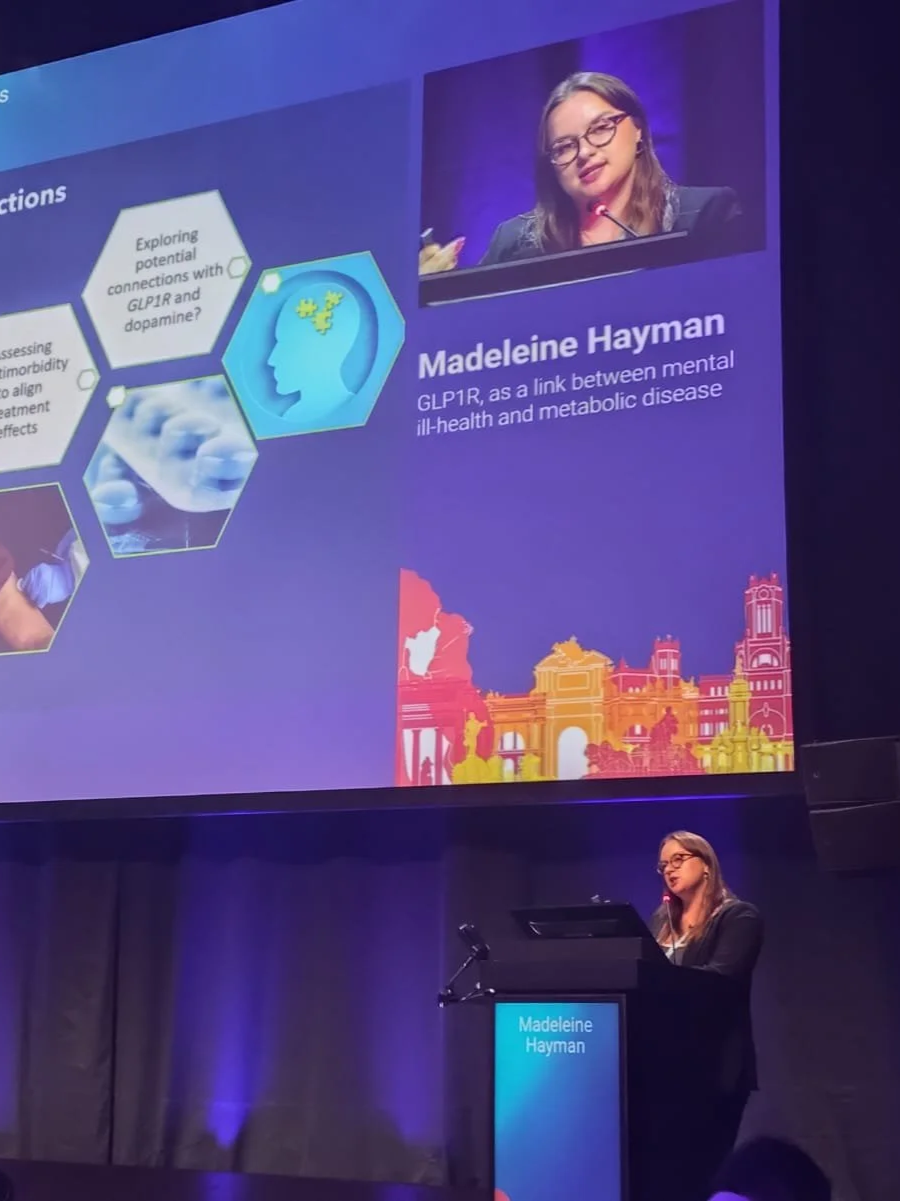
Pictured in Madrid, Spain presenting work from early in my PhD
Anyone can access research articles with Open Access Journals. One great example is BMJ Mental Health where you can directly access recent mental health related research.