Invited Author: Honouring your body with exercise while on your period
An introduction from Madeleine Hayman
One of my biggest passions is understanding health in a holistic way. That means both physical and mental health. But my expertise is specialised, focusing predominantly on the mental side of things. We all know that when our mental health dips, it can be hard to do even the most basic of things. Of course, human biology can also make things all the worse.
Menstruation is one of those curveballs that can make engaging in physical activity feel impossible, likely contributing to low mood. And for some, they are told that exercise isn’t the best option for them. But this isn’t always the case. Regardless of if you have a period or not, exercise has a long history of helping people work through difficult times and emotions. However, sometimes it’s the most difficult times of the month that we need a little extra support: so what do we do?
I asked an expert in the field, researcher Rachel Isaiah who studies how different phases of the menstrual cycle influence performance metrics such as strength, endurance, and power.
You may be asking yourself what does this have to do with mental health? Keep reading Rachel’s take on exercising on your period to notice the parallels with mindfulness and noticing that our bodies hold so much… and sometimes it’s trying to tell us something important, and perhaps it’s time we need to listen.
Exercising on your period - Rachel Isaiah
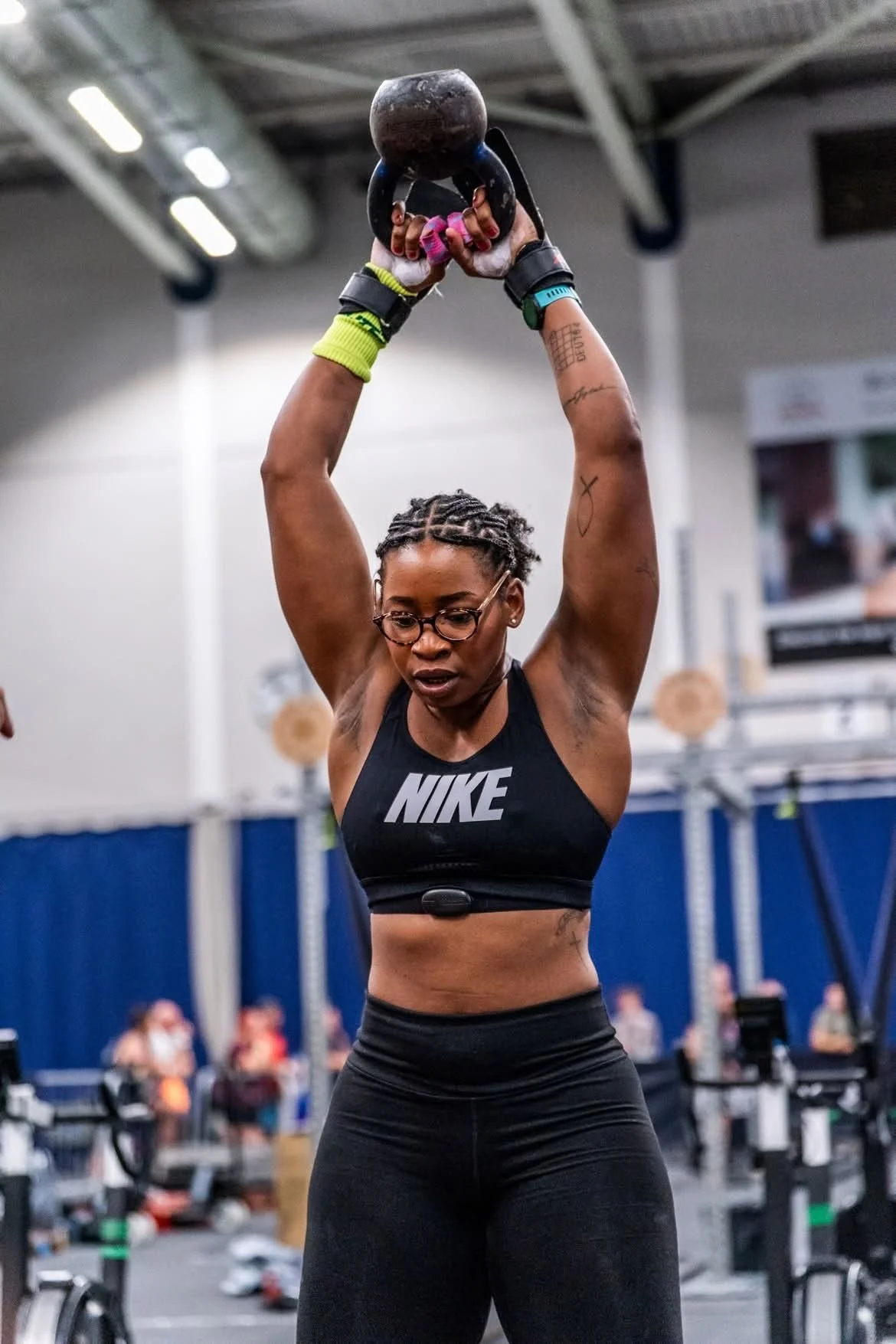
It just so happens that I’m writing this on day 1 of my cycle (first day of bleeding for those not in the know). I’m on my way to a CrossFit class.
On the menu is heavy lifting and a 10-minute work out of the day — basically HIIT workout — with double unders (if you don’t know what those are, it’s skipping with double the intensity).
Mentally, I’m feeling okay about it. I came on after the decision to train was made and I’m pretty good at keeping my exercise commitments. I also don’t have any symptoms right now. Which can’t be said for many menstruators.
Day 1 and 2 are anecdotally quoted as the “worst” days. Debilitating pain, often accompanied by nausea and/or vomiting. The range of period-related symptoms is so vast due to the variety of irregularities and gynaecological conditions experienced by women [and people] who menstruate.
Mixed into that are other factors that affect menstrual cycle symptoms too like diet, environment (weather, climate, temperature), stress (a big one), and genetics.
But symptoms aside, there are other things that add to the challenge of exercising on your period.
The myths.
If you weren’t told directly, they were passed down indirectly from maternal and paternal figures, reinforced by society. Women are weak on their periods. You’re not supposed to exercise on your period. You can’t exercise on your period or you’ll damage your organs etc.
It’s 2026 so you ignore all of that because the research currently says there’s no evidence to suggest women can’t perform at any stage of the cycle.
Just look at any woman who’s achieved anything ever, including yourself. That’s proof that women can, in-spite of their period.
So why does it still feel like you’re fighting battles just to get your ass to the gym?
Ignoring the warning shots your uterus is giving, you push through and make it in. Even though it feels like someone has their hand in there, squeezing it like a stress ball.
It also feels like a dark cloud hovers over you indifferently.
Then suddenly angry.
Angry at the world, angry at your body.
Conversations swirl around in your head. You want to be around someone and alone at the same time. It makes you sad. Now you feel like crying, but you can’t. Not in the gym. Gotta focus.
And this is the part no study really measures. Because yes, you can train.
But no one talks about what it takes to get there on days like this.
Research looks at output - strength, power, endurance. It doesn’t measure emotional regulation, pain tolerance, motivation, or the internal negotiation happening just to stay present in your body. This is where the advice part comes in.
Exercising on your period doesn’t have to be a binary decision: to train or not to train; push through or stay home. There’s a middle ground that rarely gets talked about. Showing up doesn’t have to mean performing. Training doesn’t have to mean pushing for a personal best. Some days, movement is the goal. Some days, getting through the warm-up is enough. Some days, you scale everything, move slower, take longer rests, or leave early and that STILL counts.
Listening to your body isn’t about giving up at the first sign of discomfort. It’s about noticing the difference between productive effort and unnecessary suffering.
It’s about asking yourself why you’re training today. Is it for stress relief? Consistency? Mental health? Or are you trying to prove something to yourself, to the room, to an idea of who you think you should be?
And it’s important to say this clearly: not everyone has the option to “push through”. For some, period pain is genuinely debilitating. Endometriosis, PCOS, migraines, anaemia - the list goes on.
Access, time, work, childcare, energy - all of it matters. This isn’t about toughness or discipline. It’s about context.
If you’re unsure whether to train on your period, a few simple check-ins can help:
• What does my body actually need today?
• Am I here to move, or to perform?
• If I leave halfway through, will I still be glad I came?
Sometimes the most supportive thing you can do for your training long-term is adjust, not force.
Your period isn’t the problem - unmanaged symptoms are. And while they can be real barriers, they’re not a reason to opt out entirely. They’re a reason to adjust and train smarter.
I finished the class. I made lifts, failed lifts. I moved. I didn’t feel amazing, but I didn’t feel worse either. And that, on day 1, felt like enough. Not because I proved I could do it but because I listened, adapted, and met myself where I was.
That’s the part of exercising on your period that matters most.
A closing from Madeleine
Rachel has pointed out some of the most important factors when we consider honouring what we need in a moment in time. In this case, it may be a day where our biology is throwing us for a loop, but it doesn’t stop there.
Whether it be that your body is holding onto pain from the past, emotions from the present, or worry for the future — if we are mindful, we can reconnect with our needs and move forward.