
When sleeping is hard: Why we need good sleep and tips for reflecting on your own sleep
Sleep is vital for life.
Without sleep our bodies struggle with even the most basic of tasks and in the long term can be detrimental to our overall health, because sleep offers us restoration. Through the stages of sleep, your body resets itself. Each stage of the cycle offers a different reset to your cells, hormones, muscles, and brain. In many areas, sleep (and the sleep cycle), are regulators of our circadian rhythm. Circadian rhythm may not be a new concept to you, but so we are all on the same page, it is our internal 24-hour clock. This clock is heavily influenced by light, food, genetics, and lifestyle. Although it will range from person to person, roughly the clock also has key points in it for humans.
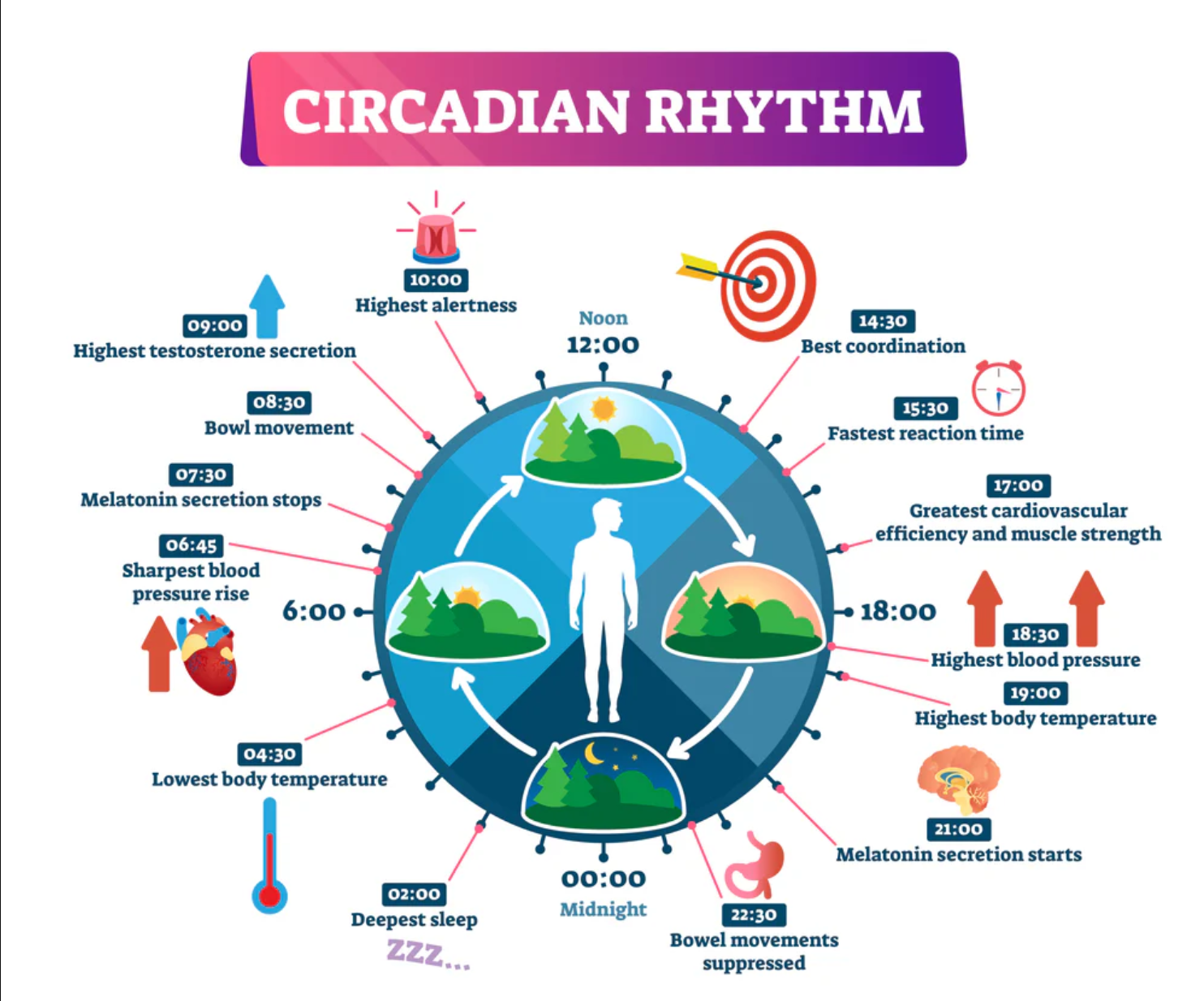
Stock illustration from Getty Images.
It should be no surprise that disruptions in this cycle have knock-on effects. I won’t spend too much time going over the science, but in summary research suggests that it is a neuronal reset.
In other words, your brain works hard in one single day, and in order for it to keep working hard, it needs to take a break. If you want to learn more about the science of sleep (in a more detailed and technical way here is a link). However you don’t need to know the ins-and-outs of sleep science to know what causes bad sleep. What disrupts the cycle in the first place?
Unfortunately, loads of things. But on the bright side, it means we can intervene to help gain better sleep habits by knowing where there is room for change.
In order to get ‘good’ sleep we must first understand our current habits.
Step one: Reflection on a week of sleeping, using a sleep diary
This way you will get a glimpse of your habits. A sleep diary is a small log of what you did in the day, you can include activities, food, and times you woke up and went to bed. After each day, rate how rested you feel in the morning following to allow yourself some comparisons.
Once the week is up, see if there are any patterns sticking out to you. If a week isn’t enough, try it over a month.
Things that have been reported to affect sleep quality:
Light exposure from phones
TV
Alcohol
Stimulants (i.e. caffeine)
Books that are *too* exciting
A scientific sidenote: Researchers study this tirelessly… So bare with me here:
From what I can surmise, there is no consensus in the scientific community about light exposure (mostly from electronics, but this may also be lighting in your home or environment) before bed, but older studies suggest it’s not a good idea.
But we also live in an age of Light. Artificial Light that is. A systematic review which is a collection of research that was reviewed to see if the results overlap to draw similar conclusions, suggested that light exposure in the evening and at night may affect melatonin levels (the hormone that makes us sleepy) linked here. So many of my recommendations for this section are operating on anecdotal evidence, personal experience, and scientific research that while lacking in statistical power (e.g. small samples), still may be useful for the everyday person.
TL:DR: Science is a little unsure about light exposure and its effect on sleep quality, but many think it doesn’t help.
Step two: understand what disrupts sleep and reflect on your sleep
All the listed above are but a few things that may impact sleep. Now, I am a big believer in the No Shame model which translates to that these are things that very well may be a part of your life before bedtime for a number of reasons and that is ABSOLUTELY okay. It’s your life. Me mentioning them here is to offer you information and perhaps there are alterative to make sure that they aren’t an every night occasion.
Small substitutions in your nightly habits might make a big difference. Here are some alternatives.
Light exposure from phones —> If your phone has a reduced light setting, or black-back light option try this instead to reduce the brightness
TV —> If you are a big TV before bed person, try audio-only such as books, sleep stories, or podcasts
Alcohol —> Alcohol right before bed can yield a bad nights sleep, if you are going to be drinking that day give your body some time between your last drink and when your head hits the pillow. In between drink lots of water and have a carb-heavy snack if you can too.
Stimulants (i.e. caffeine) —> I say this with love, but decaf is a great way to get this fix. Decaf tea, coffee, coca-cola can help you in moments where you may be tempted to have caffeine. Consider what your own personal threshold is. For me caffeine after 4PM usually means a rough time falling asleep.
Books that are *too* exciting —> This one can be tricky, one great way to still read the things you enjoy is taking a sandwiched approach. If your book is a bit too exciting, read another book right after that is a bit more tame to help get you read for bed.
Step three: Consider other aspects of your life and how it affects you sleep
Some people report that their diet can sometimes disrupt sleep; people have even reported nightmares being associated with dairy and sugar consumption - while many of the research for the connection of nutrition and sleep is still preliminary, it can be helpful in your review of your own sleep patterns. There have been a few studies that say a low fibre diet can mean less restful sleep.
People who engage in physical activity, with varying intensity, are also reported to sleep better. Incorporate physical exercise in your daily routine may be the very thing you need to help your sleep cycle do it’s thing.
Sleeping is sometimes not the only problem
If waking up is hard - Make it enjoyable! Here are some small recommendations:
Gentle alarm, try not to snooze
Do something you like - read, stretch to a song you really dig at the moment, make your morning cuppa before you start with the monotony of the day
Wake up every day at the same time can really help with this one.
But I would remiss to not acknowledge two very important factors in how a person sleeps. 1) Anxious thoughts and 2) Good sleep is different from being rested.
Anxious thoughts sometimes keep us awake at night or make up wake up in the middle of the night panicked. High anxiety can be debilitating and some times the best thing for you to do is to seek support. In the short term, mindfulness has been proven a wonderful way to redirect the mind away from anxious thoughts and recentre yourself.
Good sleep and being rested are fundamentally different. Dr Raquel Martin, a clinical psychologist who specialises in mental health of Black communities in the United States, articulates this the best way: She explains that rest is not just one thing, but often is specific to different parts of being human. She describes five domains of rest as mental, social, emotional, sensory, and spiritual and I think she is spot on. You can watch her 2 min video here on IG.
Feeling rested for many people can be a privilege, often because rest comes with being safe to be vulnerable. For those who have to be on guard often or experience excessive stress in their daily lives will often feel like rest is something they are always chasing. So even if you do get ‘good’ night sleep, exhaustion is still possible if your your body is operating in a state of survival. There are no small steps or quick fixes for systemic struggles, but acknowledging if that is happening for you is a huge step. The next step being honouring yourself and determine what you need to work toward cultivating a space where you can be vulnerable, and give yourself space to truly feel, repair, restore and ultimately rest.
